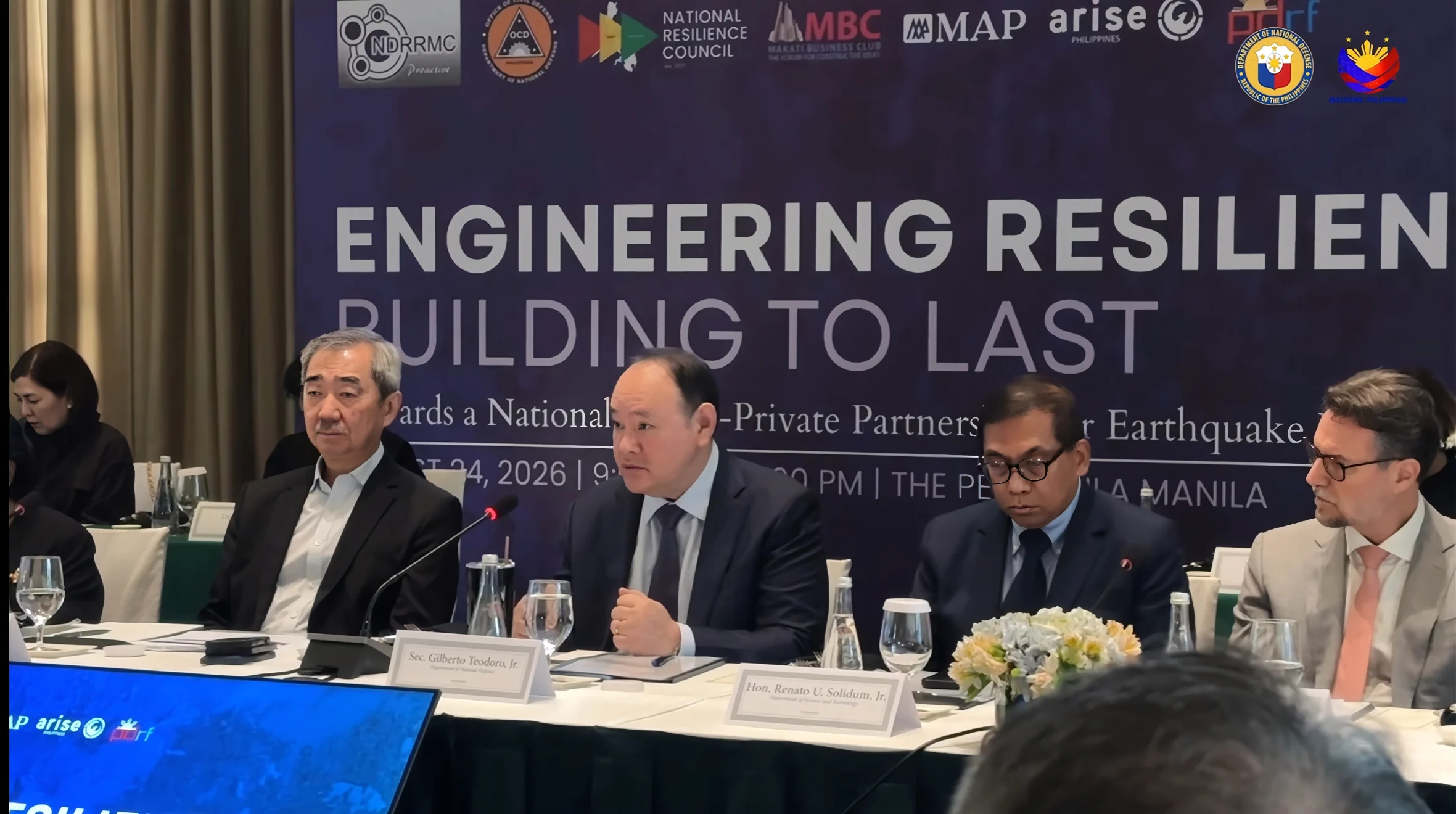
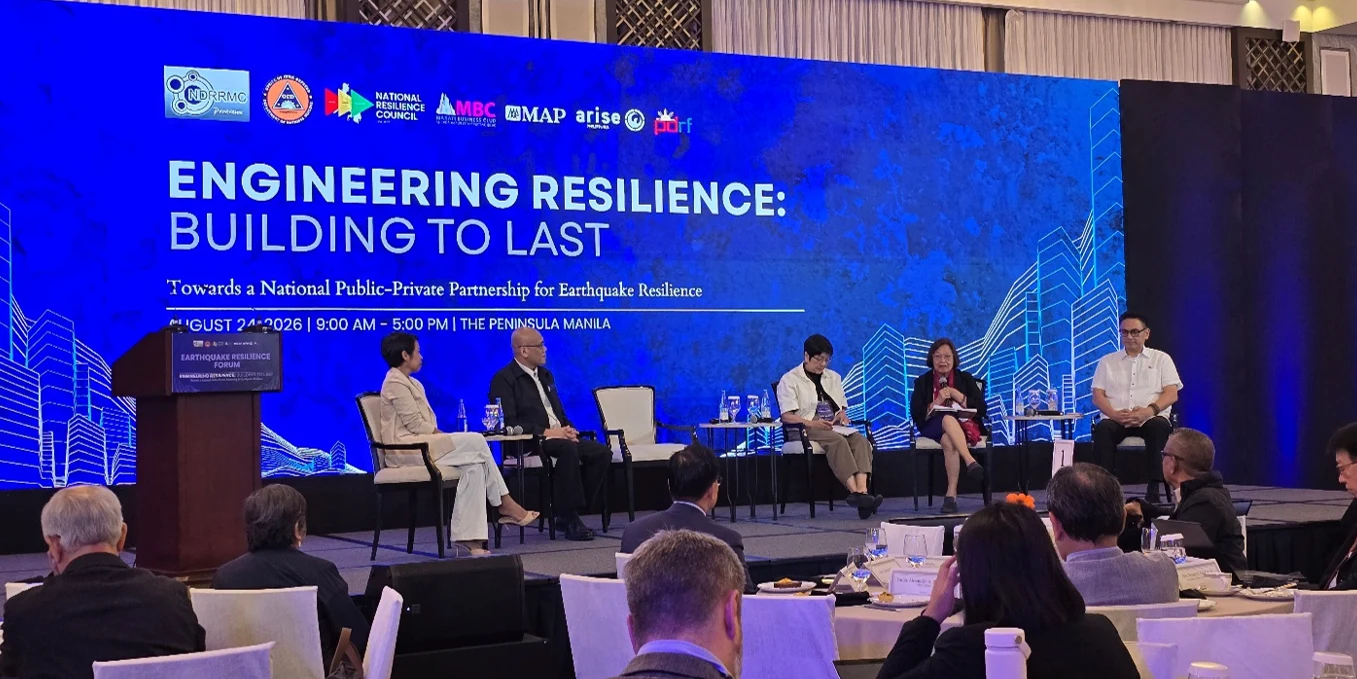
The Peninsula Manila, Philippines, 24 August 2026 — Senior government officials, scientists, private sector leaders, and civil society representatives gathered today for the Engineering Resilience: Building to Last forum, convened by the National Disaster Risk Reduction and Management Council through the Office of Civil Defense, with full support and participation from ARISE Philippines and National Resilience Council (NRC) members, partners, and other stakeholders. Held under the theme “Engineering Resilience by Strengthening Structures, Systems, and Society,” the event underscored the urgent need to move beyond traditional response mechanisms toward proactive, risk-informed investments that protect lives, livelihoods, and critical infrastructure in one of the world’s most seismically active regions, and to accelerate risk-informed investments and whole-of-society action on earthquake resilience for the “Big Ones” in the Philippines, with a main message focused on harmonizing private-sector initiatives to maximize collective impact and avoid fragmented efforts.
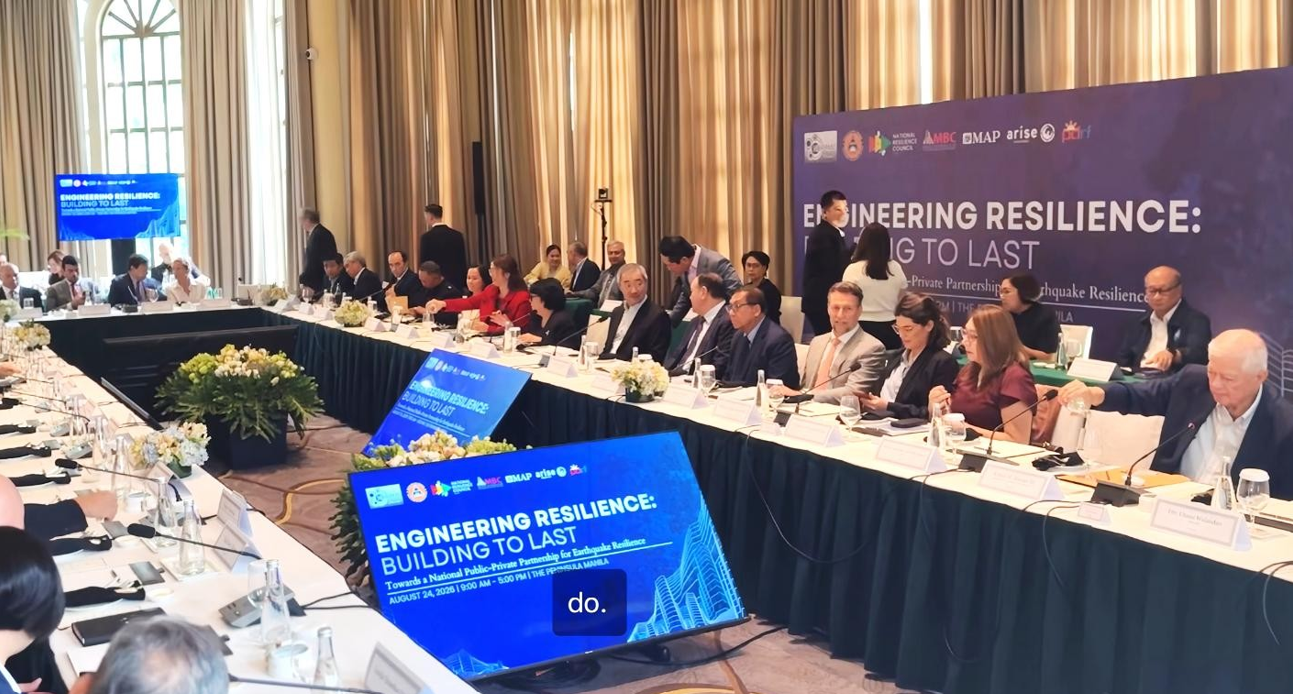 The forum emphasized that while hard infrastructure remains essential, equal attention must be given to strengthening “soft” infrastructure—health, education, and social protection systems—to enhance adaptive capacities and minimize adverse socioeconomic impacts. Participants stressed that development decisions that fail to integrate past and future disaster risks only exacerbate existing vulnerabilities, calling for a paradigm shift toward systemic risk reduction and resilient urban planning.
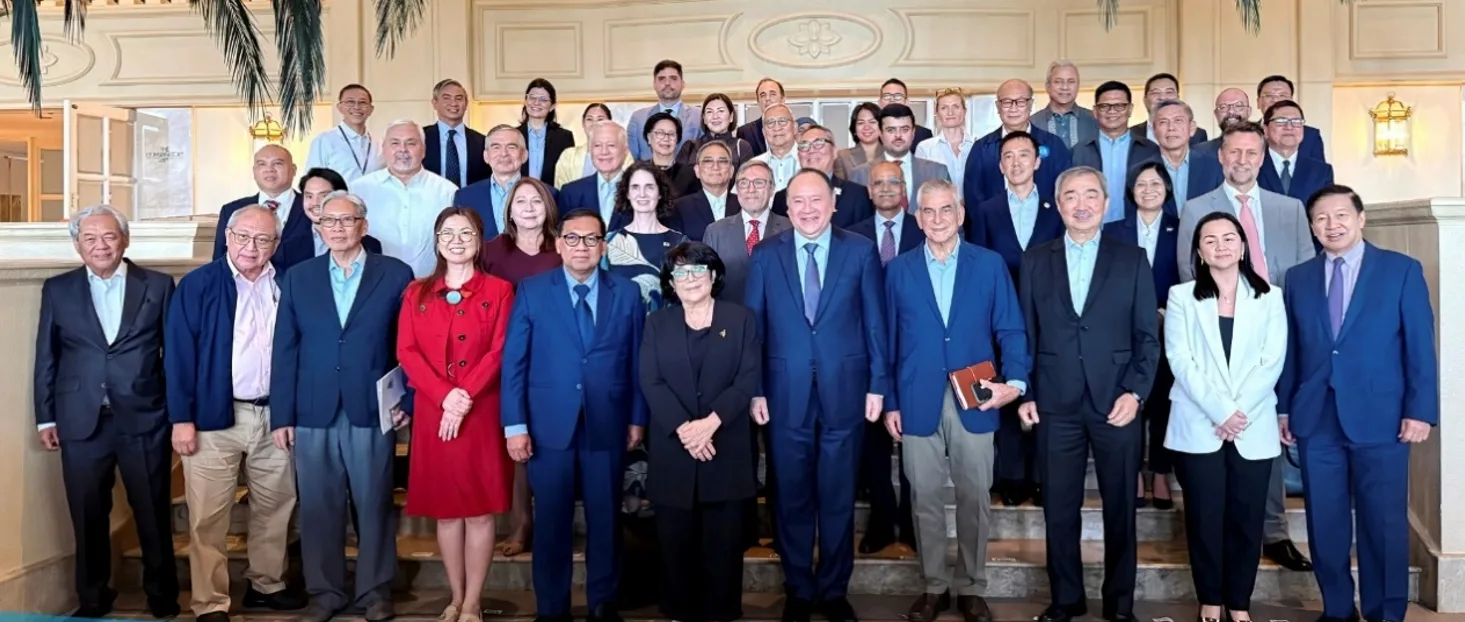
ARISE Philippines Chairperson Mr. Hans T. Sy attended the High-Level Dialogue, representing both ARISE Philippines and SM Prime Holdings, Inc. He joined Secretary of National Defense and NDRRMC Chair Gilberto C. Teodoro Jr., Special Envoy of the President for Disaster Risk Reduction and Management Hon. Maria Antonia Yulo Loyzaga, and other leaders from government, the diplomatic corps, and the private sector to discuss priority actions for large-scale seismic risk reduction and business continuity, and the role of the private sector in national resilience architecture.
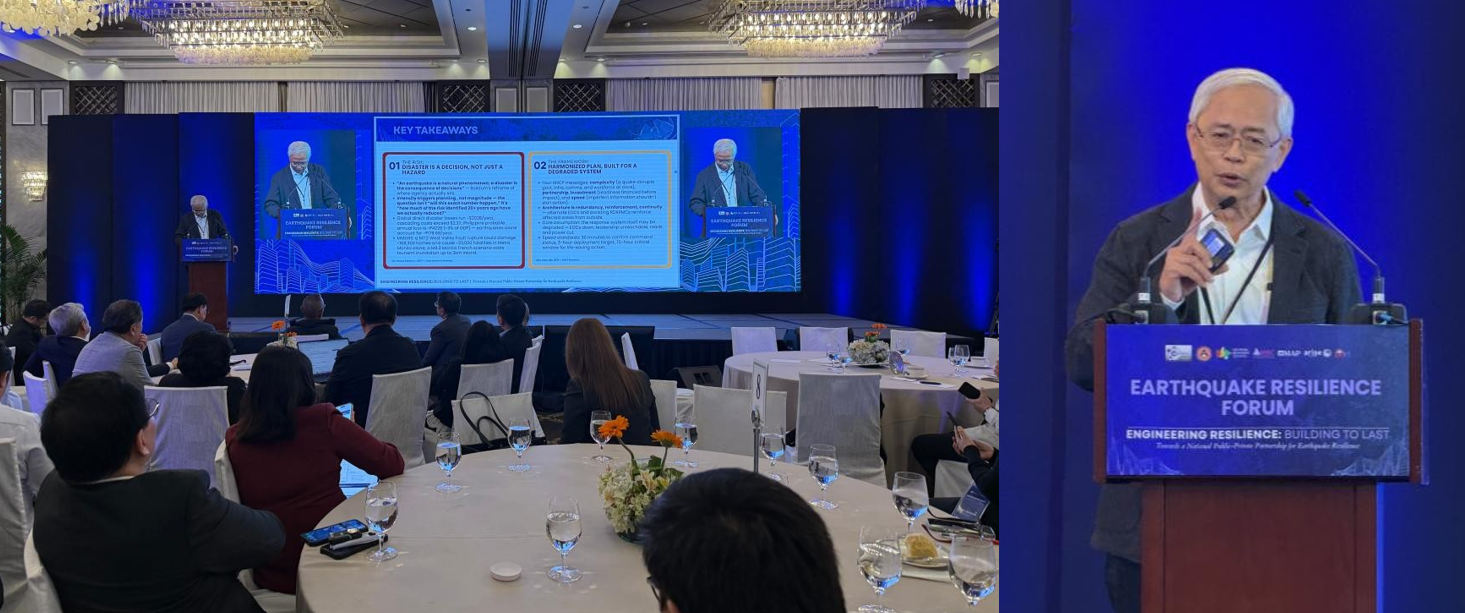
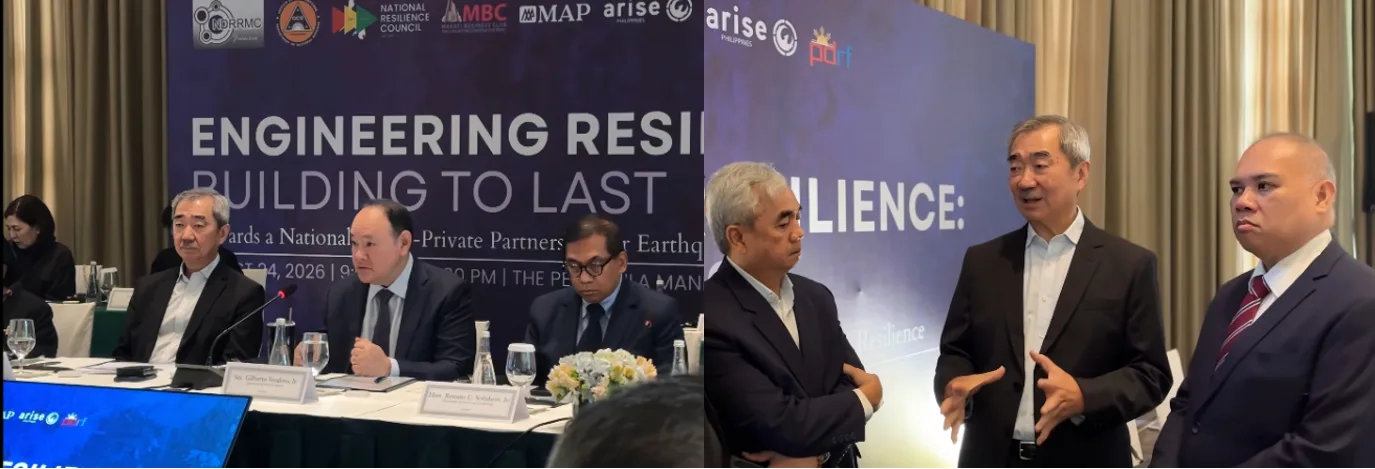 The event’s earthquake resilience forum highlighted scientific advancements, national earthquake scenarios, and technology integration to guide resilient infrastructure and lifeline protection. Sessions featured presentations by DOST Secretary Renato U. Solidum, Jr., NDRRMC Executive Director and Civil Defense Administrator Usec. Harold Cabreros, Dr. Wei-Sen Li of the APEC EPCC and Taiwan’s National Science and Technology Center for Disaster Reduction, and Mr. Takahiro Ono of Tokio Marine Holdings, who shared evidence on how business continuity planning can reduce economic losses from disasters.
The afternoon featured four parallel breakout sessions under Session 2: “Strengthening Systems for Earthquake Resilience through Multistakeholder Partnerships.” All sessions were represented by ARISE Philippines members serving as Moderators, Coordinators, and Documenters from the private sector, alongside the Office of Civil Defense (OCD) representing government: 1) Sustaining Social Systems: Food, Social Protection, and Health Security — moderated by Prof. Jessica Dator-Bercilla, NRC; 2) Powering Resilience: Strengthening Utility Systems (Energy, Water, Telecommunications, and Infrastructure) — moderated by Atty. Michael Toledo (PDRF); 3) Fortifying Connectedness and Industry/Business Resilience (Transport, Supply Chain, Retail/MSMEs, and Logistics) — moderated by Prof. Varsolo Sunio (UA&P) coordinated by Executive Director Dr. Joseph Bacareza, ARISE Philippines, with Ms. Hannah Grace Escamilla as documenter; participants included Engr. Liza B. Silerio (SM Supermalls) and Mr. Rafael C. Hidalgo (Steel Asia); and 4) Mobilizing Readiness: Preparedness for Response and Recovery — moderated by VADM Alexander P. Pama, ARISE Global, with Ms. Pauline Serquina (NRC) as documenter.
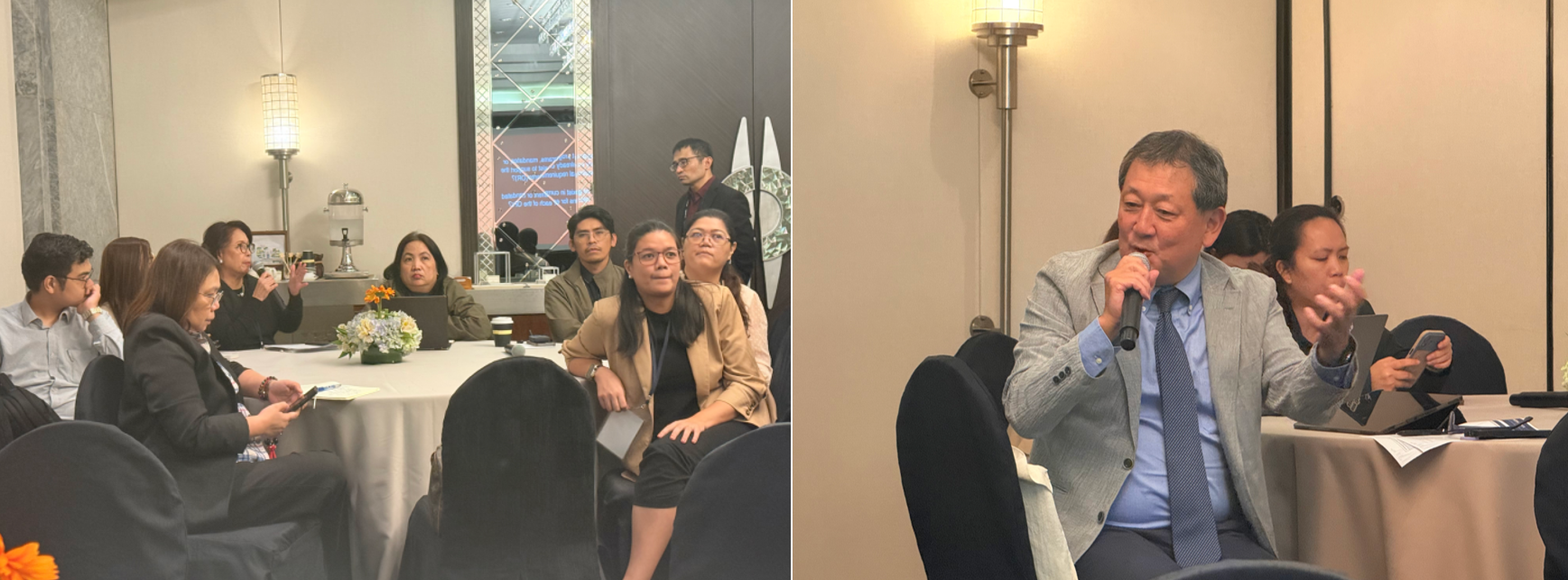
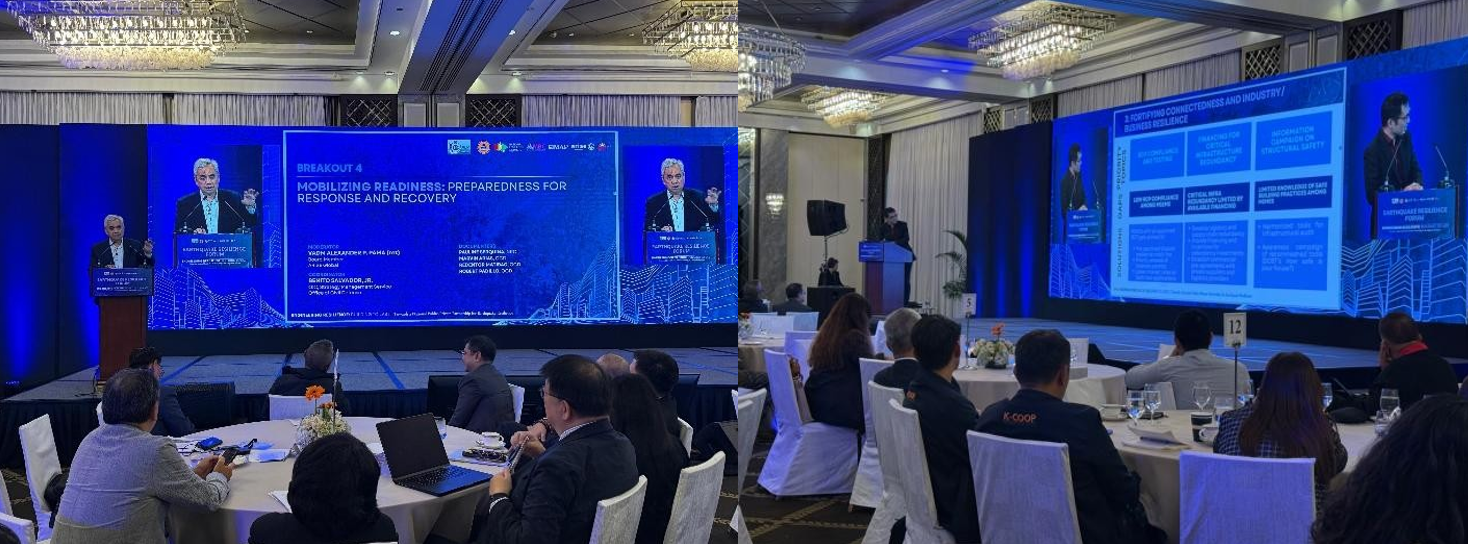
Breakout group outcomes were presented in plenary and synthesized by Mr. Austere A. Panadero, President of the Zuellig Family Foundation and an ARISE Philippines Board member. The forum produced three key outputs: (1) identification of minimum functionality levels for critical sectors during a catastrophic seismic event; (2) mapping of interdependencies among systems to reduce points of criticality and limit cascading failures; and (3) a joint public–private agenda to strengthen plans and policies for earthquake resilience.
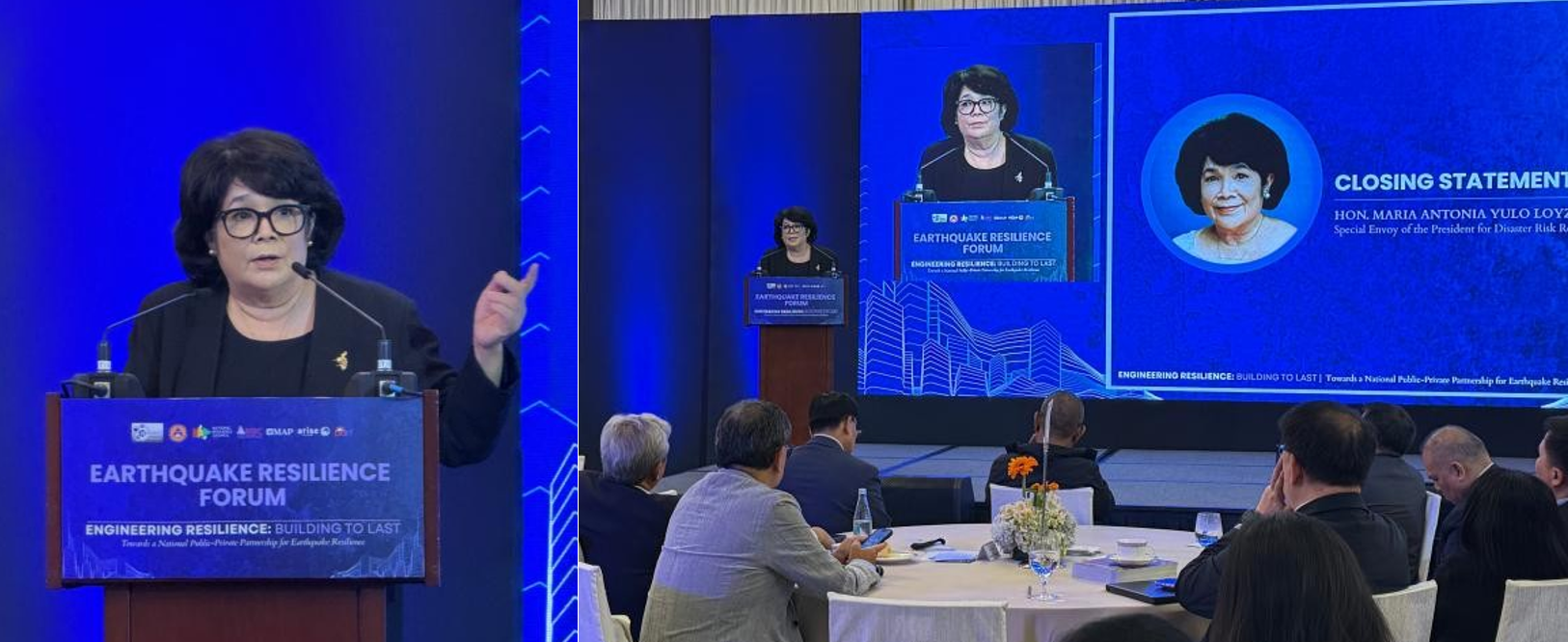
In her Closing Statement, Hon. Maria Antonia Yulo Loyzaga commended the multi-sectoral collaboration demonstrated throughout the forum and reaffirmed the government’s commitment to advancing a National Public–Private Partnership for Earthquake Resilience.
The Engineering Resilience Forum served as a preparatory platform to launch a National Public–Private Partnership for Earthquake Resilience, ensuring synergy and continuity in addressing seismic risks. By fostering collaboration across government, academic and scientific institutions, the private sector, civil society, and local communities, the summit demonstrated a whole-of-society approach to closing critical gaps in science, policy, capacity, and communications.
ARISE Philippines remains committed to actively contributing to the translation of these outcomes into national and local policies, investment plans, and coordinated programs that advance earthquake resilience across the Philippines.